Who Authorises the Agent
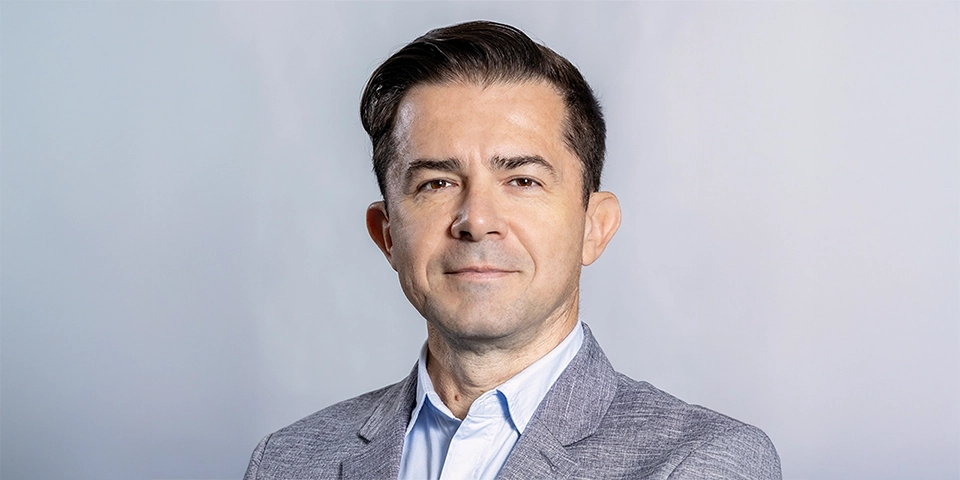
A conversation with Ivan Vukelikj, Secure Digital Payments expert, G+D Netcetera, ahead of his speaking session & panel appearance at MPE Berlin 2026.
The transaction happens without a human in the room. That is the simplest definition.
AI agents, acting on behalf of consumers or businesses, are increasingly making purchasing decisions autonomously. Your smart assistant is reordering supplies. Your travel app booking and paying for a hotel without you lifting a finger. Your car is settling a toll or a parking fee in real time.
This isn’t science fiction. The building blocks are already here. What the payments industry hasn’t fully resolved yet is the trust layer. How do you authenticate a transaction when the entity initiating it isn’t a person?
It challenges some of the core assumptions our industry has relied on for decades. Traditional authentication was designed around a human being present, aware, and consenting. Strong Customer Authentication, 3-D Secure, and biometrics were all built with a person in the loop.
Agentic commerce breaks that loop. So the question shifts from “is this the right person?” to “is this the right intent?” Verifying not just identity, but purpose and context. That requires a fundamentally different approach, combining real-time behavioural signals, delegated authorisation frameworks, and intelligent risk decisioning that can operate at machine speed.
Speak internally and exchange. Many institutions are still treating agentic commerce as a future problem, but its here. The infrastructure decisions being made today will determine how ready you are when volume arrives, and it will arrive faster than most expect.
Practically, that means reviewing your authentication architecture with a new pair of eyes. Where does it assume human presence? Where does it break down if an agent is initiating the transaction? And critically, do you have the risk decisioning capabilities to distinguish legitimate autonomous transactions from fraudulent ones at scale?
A sense of urgency without anxiety. Agentic commerce is an opportunity as much as it is a challenge. The payments ecosystem has navigated transformative shifts before: from card-present to card-not-present, from passwords to biometrics, and from static rules to machine-learning-based fraud detection. Each time, the industry adapted, and the result was better, safer, more trusted payments for everyone.
This is the next chapter. And the conversation we will have at MPE is exactly the kind that moves the industry forward, bringing together issuers, PSPs, technology providers, and merchants to ask the hard questions together.
I’d encourage anyone attending MPE to come and challenge us. The best outcomes come from the best debates.
Ivan Vukelikj will be speaking on the Agentic Commerce panel at MPE Berlin 2026. Meet the G+D Netcetera team: Borkica Shekjerova, Simon Guggenbichler, Simeon Miles.