
G+D Netcetera manages 1.4 billion tokens
Payment tokenization as prerequisite in e-commerce


Replaces a customer's real card number with a unique token specific to the merchant and payment context. The token can only be used in the context for which it was generated, not extracted, replayed, or used elsewhere. Tokens without their cryptographic context are worthless.
Lifecycle management events keep customer payment credentials current, expiring or renewed cards updated automatically, ensuring a seamless payment experience.
Customers do not face declined payments because their card changed. The token stays current without any action from them.
Token-initiated transactions improve risk ratings by issuers, leading to higher approval rates.
For a PSP or merchant processing meaningful card-on-file volume, the increased approval rate is measurable revenue.

The eCOM Tokenizer is already integrated with the major card networks' token services. You do not build those connections, you connect to G+D Netcetera's existing, certified infrastructure. One integration covers every supported network. Time to market is measured in weeks, not the months that individual network integrations require.

One interface connects checkout systems to multiple token services, with unified flows regardless of which card network is behind the token. One API, one integration, cover every supported network. No separate authentication flows per scheme, nor different data formats per network.

Offered as a managed service with automatic implementation of card network updates. When Visa, Mastercard, or other schemes update their tokenization specifications, G+D Netcetera implements those changes at the platform level. Your integration does not break.

Acquirers processing tokenized card-on-file authorizations benefit from favorable scheme pricing, avoiding the additional fees applied to PAN-based transactions by major schemes. Tokenization is not just a security investment, but a cost efficiency one that compounds over transaction volume.
Network tokenization replaces a customer's real card number with a unique token specific to the merchant and payment context. The card network's token service holds the mapping between token and PAN, accessible only through authenticated, authorised requests. A breach of stored credentials yields tokens. Tokens without their cryptographic context are worthless.
The token carries scheme-level assurance data that improves issuer risk decisions and approval rates.
Payment cards expire, get lost, and get replaced. Without lifecycle management, a stored card-on-file token becomes invalid when the underlying card changes and the customer faces an unexpected decline. The eCOM Tokenizer manages token lifecycle events automatically: expiry notifications, card renewal updates, and credential changes handled at the token level. Customers do not need to re-enter card details. Merchants do not lose revenue to avoidable declines.
The eCOM Tokenizer is a card network-neutral solution. It connects checkout systems with the token services of multiple major card networks through a single API and unified flows. Merchants and PSPs integrate once and cover every supported network with no per-scheme authentication differences, no varying data formats, no separate integrations to maintain as the network landscape evolves. New networks and specifications are absorbed at the platform level without requiring re-integration.
Card network updates are implemented at the platform level by G+D Netcetera and applied automatically to all connected clients. No update project, no re-certification effort, no downtime. The service stays current and compliant. Clients focus on their product; G+D Netcetera handles the infrastructure that keeps the tokenization layer working correctly across every supported network.
The eCOM Tokenizer carries certifications and pre-evaluations from major card networks and has received industry recognition for its approach to payment security. For PSPs and merchants undergoing scheme compliance reviews, G+D Netcetera's certified infrastructure provides documented evidence of compliance that reduces the scope and burden of your own assessments.
PCI DSS certified. Visa and Mastercard scheme certified. Juniper Research Platinum Award for Best Tokenization Platform.


When a card is renewed, the token updates. When a wallet re-provisions, it happens in the background. The customer never sees an unexpected decline, never has to re-enter card details, and never has to think about the infrastructure keeping their payment working.

Real card numbers are never stored across dozens of merchant databases. Tokens are merchant-specific; a token generated for one merchant cannot be exploited by another. The cardholder's credentials are protected at every point of storage, transmission, and use.

Tokenized card-on-file transactions carry additional assurance data that issuer risk systems recognize as lower risk. More trust means more approvals with fewer declined purchases at the moment the customer wants to buy.
Token-initiated transactions carry additional assurance data that issuer risk systems treat as lower risk. When combined with 3DS authentication, this risk signal improves approval rates further — because the issuer has both the tokenization assurance and the 3DS authentication data to inform the decision.
G+D Netcetera builds both the eCOM Tokenizer and the 3DS Server. The two products are designed to work together, and the combined signal reflects that.

By removing raw card numbers from your environment and replacing them with network tokens, the eCOM Tokenizer reduces the scope of your PCI DSS assessment. Systems that never store, process, or transmit PANs are either out of scope or have significantly reduced scope under PCI DSS.
G+D Netcetera's managed service model also means scheme certification and update compliance is handled by G+D Netcetera — so the ongoing compliance maintenance overhead drops alongside the initial scope reduction.

Network tokenization specifically refers to tokens issued by the card networks themselves — Visa, Mastercard, and others — through their official Token Service Provider programs. Network tokens carry scheme-level assurance data that proprietary tokens do not. This is why network tokenized transactions receive better risk ratings from issuers and qualify for favorable scheme pricing. The eCOM Tokenizer delivers network tokenization — not a proprietary substitute.
Yes. The eCOM Tokenizer provides a single API and unified flows for connecting your checkout system to multiple card network token services. It is designed for straightforward integration with existing PSP and merchant checkout environments. G+D Netcetera is already integrated with the major card networks' token services — which means your integration connects to existing, certified infrastructure rather than building new network connections from scratch. Integration effort is typically measured in weeks.
Token lifecycle management handles this automatically. When an underlying card is renewed, replaced, or updated, the corresponding token is updated through the card network's lifecycle event system. The merchant's stored token remains valid and continues to work — the customer does not need to re-enter their card details, and the merchant does not experience an avoidable decline. This is one of the most commercially significant benefits of network tokenization: it keeps recurring and card-on-file payments working through the full card lifecycle without customer friction.
Token-initiated transactions carry additional data that issuer risk systems use to assess transaction risk. A network token signals that the transaction originated from an authenticated, scheme-approved token rather than a raw PAN — which issuers treat as a lower-risk signal. Combined with lifecycle management assurance that the credential is current and valid, tokenized card-on-file transactions consistently achieve higher approval rates than equivalent PAN-based transactions. Visa reports +4%. Mastercard reports +3%.
Three things that are hard to replicate: scale, neutrality, and the managed service model. Scale: more than 1.4 billion payment tokens processed across issuers and acquirers on three continents — proven infrastructure, not a new entrant. Neutrality: the eCOM Tokenizer is card network-neutral, covering every major scheme through a single integration without preference for any one network. Managed service: scheme updates applied automatically, compliance maintained continuously, zero operational overhead on your side. The Juniper Research Platinum Award for Best Tokenization Platform is the independent validation of that track record.
Integration documentation for SaaS and on-premise deployments, API references, and test environment access. Both deployment paths, fully documented.
Authentication and tokenization work together. Token-initiated transactions carry assurance data — 3DS adds authentication data. Together they give issuer risk systems the clearest possible picture. G+D Netcetera builds both, designed to perform well in combination.

Click to Pay is built on payment tokens. The eCOM Tokenizer provides the e-commerce token infrastructure that enables Click to Pay transactions — the same scheme-neutral approach runs through both products.

For issuers who want to go beyond e-commerce tokenization — into Alias Directory Services, payment passkeys, XPay wallet provisioning, and A2A security — the Fusion Platform delivers all of this through a single connection.


Payment tokenization as prerequisite in e-commerce

First-party misuse is now the world’s leading type of fraud, yet it is almost impossible to spot at checkout. Discover why friendly fraud is rising, what it costs the payments industry, and how better data sharing could help distinguish genuine disputes from deliberate abuse.

G+D Netcetera wins two Juniper Awards 2026 for fraud prevention and digital wallets, as banks rethink their systems landscape for future payments

3DS and SCA are working as designed. So why is UK payment fraud still rising?

This free on-demand webinar with G+D Netcetera and The Payments Association UK explores why 3DS alone is no longer enough, and how banks can use earlier intervention, cross-channel intelligence and secure data sharing to make fraud prevention more proactive.

G+D Netcetera Becomes an Official AWS Partner, Strengthening Cloud-Based 3DS Solutions
Your Essential Introduction to Passwordless Authentication. Tired of password resets, phishing attacks, and frustrated customers? It's time to discover passkeys—the authentication technology that's making passwords obsolete.

Payment trends for 2026: digital identity wallets, network tokenisation, AI fraud prevention, VRPs, embedded finance and payment orchestration.
In our latest podcast episode, payment network expert Michael Schoch explains how Secure Remote Commerce (SRC) is creating new growth opportunities for domestic card networks.
This Tech Tribe episode gives a rare look into how advanced fraud prevention works when every second counts — and how the right expertise can turn a crisis into a controlled situation.

CEO Carsten Wengel sits down with Martina Forster, Portfolio Owner for Secure Digital Payments at G+D Netcetera, to explore the evolving world of digital payments: from 3-D Secure to instant payments, Big Tech, and digital identity.

Protecting the business and customers from invisible threats

Make Instant Payments a success with G+D Netcetera, as your strategic partner
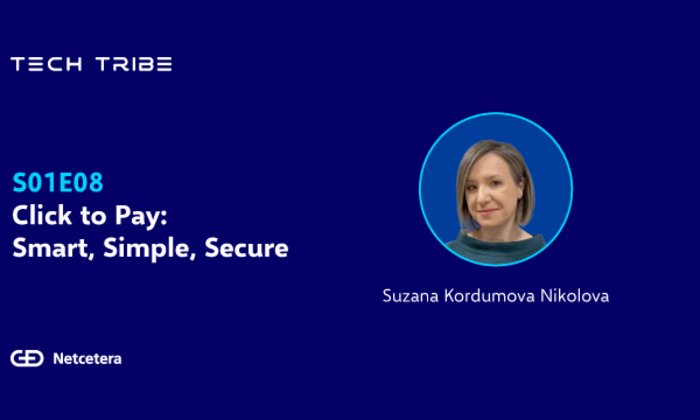
Remember the last time you abandoned a purchase because you couldn’t find your card? How much time, energy, and mood did you waste filling in the requested information? Ultimately, you just left your purchase because it was too time-consuming, data-consuming, and energy-consuming. Sound familiar? That’s exactly why Click to Pay was created. In this episode with Suzana Kordumova Nikolova, we explore what makes Click to Pay different from Apple Pay and Google Pay, how it enhances security, and why businesses adopt it.
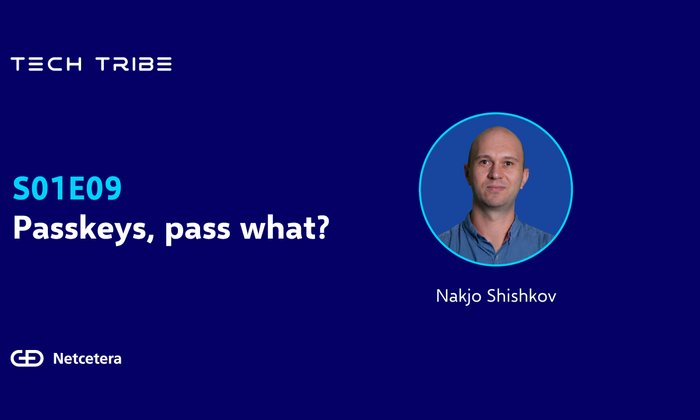
Passwords are becoming a thing of the past. Passkeys deliver a safer, faster, and more seamless way to log in and approve payments. Payment expert Nakjo Shishkov explains how passkeys, 3DS, Click to Pay, and FIDO authentication set new standards for secure digital experiences. Learn how passkeys work, why they improve security, and how they drive better user journeys and higher conversion rates.
Wach the Click to Pay webinar featuring G+D Netcetera, Worldline, and Visa experts.

Maximizing Trust and Efficiency: G+D Netcetera expands ISAE 3402 certification to cloud services